Friday, May 28, 2010

Justice Schack: You have just crossed over into the Twilight Zone


In HSBC Bank USA, N.A. v. Yeasmin, 2010 NY Slip Op 50927(U), Justice Schack dismisses a motion for an order of reference brought by Steven J. Baum, P.C., on behalf of HSBC on the grounds that it is was untimely by 204 days.  By more importantly, Justice Schack writes, “[E]ven if the instant motion were timely, the explanations offered by plaintiff’s counsel…are so incredible, outrageous, ludicrous and disingenuous that they should have been authored by the late Rod Serling, creator of the famous science-fiction television series, The Twilight Zone.  Plaintiff’s counsel, Steven J. Baum, P.C., appears to be operating in a parallel mortgage universe, unrelated to the real universe.”

Drawing upon his Twilight Zone theme, Justice Schack humorously proceeds to excoriate the attorneys of Steven J. Baum, P.C., and notes, among other things, the ongoing conflict of interest that apparently exists due to Baum’s simultaneous representation of foreclosing banks and their assignor, MERS.  In addition, Justice Schack wonders why plaintiff HSBC would purchase a mortgage such as the one here at issue after it had already gone into default.  He writes, “The Court can only wonder if this journey through the mortgage twilight zone and the dissemination of this decision will result in Mr. Westmoreland’s affidavit used as evidence in a future stockholder derivative action against plaintiff HSBC.  It can’t be comforting to investors to know that an officer of a financial behemoth such as plaintiff HSBC admits that ‘[a]n investigation of each and every loan included in a particular mortgage pool, however, is not conducted, nor is it feasible’ and that ‘the fact that a particular mortgage pool may include loans that are already in default is an ordinary risk of participating in the secondary market.’”  In an extraordinarily frank admission, Mr. Westmoreland provided sworn testimony that HSBC regularly assumes the risk of buying mortgages in bulk without examining whether the mortgages in question are in default or in good standing.

This concludes today’s tale of greed in Baum’s parallel mortgage universe on the Twilight Zone.

Wednesday, May 26, 2010

Judge Schack Locks Up Attorney for Civil Contempt

By the Staff of the New York Law Journal

A lawyer was sentenced up to six months in jail for contempt in Brooklyn Supreme Court yesterday for disobeying court orders requiring him to surrender $100,000 that he had been holding in escrow. 

Justice Arthur M. Schack ordered Samuel Racer jailed for failing to turn over the $100,000 that the Manhattan-based attorney had been holding in a failed real estate deal that was the subject of litigation before the judge, said Kali Holloway, a spokeswoman for the Office of Court Administration. In April, Justice Schack found Mr. Racer in contempt for failing to turn over the money and issued an order for his arrest. Yesterday, a sheriff apprehended Mr. Racer and brought him before the judge. 

When Mr. Racer informed Justice Schack that he needed several days to get the money, the judge sentenced him to jail for civil contempt for six months unless he produced the funds before then, Ms. Holloway said. 

Mr. Racer was remanded to the custody of the sheriff, and another court date was set for tomorrow at which Mr. Racer will have another opportunity to purge himself of the contempt, Ms. Holloway said.

Tuesday, May 25, 2010

Deutsche Bank Lacks Standing in a Kings County Forclosure Action

Deutsche Bank Natl. Trust Co. v. Stevens, 2010 NY Slip Op 50909(U).  This decision was rendered by J. Yvonne Lewis in the Supreme Court, Kings County, and was published on May 24, 2010.  This is a foreclosure action brought by Deutsche Bank which moved for an order of reference among other things.  The originating lender was Fremont Investment & Loan, and Deutsche Bank purportedly became the holder of the note and mortgage by assignment from MERS as nominee of Fremont on June 11, 2008.  Deutsche Bank commenced the foreclosure action June 2, 2008, before the assignment actually took place. For this reason J. Lewis denied Deutsche Bank's motion and dismissed the case without prejudice for lack of standing, and quotes the following well-trodden authority in support of her holding:

"Where the plaintiff is the assignee of the mortgage and the underlying note at the time the foreclosure action was commenced, the plaintiff has standing to maintain the action" (Federal Natl. Mtge. Assn. v Youkelsone, 303 AD2d 546, 546-547 [2003]; see Natl. Mtge. Consultants v Elizaitis, 23 AD3d 630, 631 [2005]). On the other hand, "foreclosure of a mortgage may not be brought by one who has no title to it" (Kluge v Fugazy, 145 AD2d 537, 538 [1988]) and an assignee of such a mortgage does not have standing to foreclose unless the assignment is complete at the time the action is commenced (see Wells Fargo Bank, N.A. v Marchione, 69 AD3d 204 [2009]; Lasalle Bank Nat. Assn. v Ahearn, 59 AD3d 911 [2009]).
Interestingly, J. Lewis notes that if Deutsche Bank were able to demonstrate that it took physical delivery of the mortgage prior to the commencement of the forelcosure on June 2, 2010, things might have turned out differently.   In fact, I do recall encountering authority indicating that physical delivery of the note and mortgage is the functional equivalent of an assignment; however, that would be true only if the note was a negotiable instrument.

It should also be noted that J. Lewis' decision is somewhat lacking in precision--she appears to be employing a sort of legal short hand--when she refers to "the mortgage", she is presumably referring to the note and the mortgage.  As noted in a previous post, a mortgage cannot have a separate existence from the note.  If the note is assigned, the mortgage automatically follows.  However, if the mortgage is assigned without the accompanying note, the assignment is defective.

Friday, May 21, 2010

Loan Modification Seekers Beware!

Home loan modification telemarketers charged with stealing $2.3 million from desperate homeowners

Canoga Park telemarketers bilk $2.3 million from homeownersA casino-style telemarketing operation run by nine men out of a Canoga-Park, Calif. boiler room is charged with stealing $2.3 million from desperate homeowners seeking home loan modifications to prevent foreclosure.

Four of nine men being accused of running the illegal business are in custody, while police are seeking another five.

Monday, May 17, 2010

Justice Martin Schneier grants Eastern Sav. Bank's motion for summary judgment

In Eastern Sav. Bank, FSB v Belches, 2010 NY Slip Op 50850(U) (Sup. Ct. Kings County 2010), Justice Martin Schneier grants Eastern Sav. Bank's motion for summary judgment on the grounds that the defendant's opposition papers were "wholly conclusory and not responsive to the [Plaintiff's] moving papers."

The party moving for summary judgment must make a prima facie showing of entitlement to judgment as a matter of law, offering sufficient evidence to demonstrate the absence of a triable issue of fact (CPLR Section 3212 (b); Alverez v Prospect Hosp., 68 N.Y.2d 320 (1986); Zuckerman v City of New York, 49 N.Y.2d 557 (1980); Frances Megafu v Tower Insurance Company of New York, 2010 Slip Op. 03883 (2d Dept.)). However, once the moving party has satisfied this obligation, the burden then shifts; "the party opposing the motion must demonstrate by admissible evidence the existence of a factual issue requiring a trial of the action" (Zuckerman v. City of New York, supra) "Mere conclusory assertions, devoid of evidentiary facts, are insufficient for this purpose, as is reliance upon surmise, conjecture, or speculation" (Morgan v. New York Telephone, 220 A.D.2d 728, 729 (2d Dep't1995)). 

In a mortgage foreclosure action in order to establish its prima facie entitlement to summary judgment as a matter of law the plaintiff must submit the mortgage and unpaid note, along with evidence of default.  (U.S. Bank Nat. Assn. TR U/S 6/01/98 (Home Equity Loan Trust 1998-2) v. Alvarez, 49 AD3d 711 (2d Dept. 2008); Marculescu v Ovanez, 27 A.D.3d 701 (2d Dept. 2006)).

Friday, May 14, 2010

Detroit Shrinks Itself, Historic Homes and All

DETROIT—Wrecking crews are preparing to tear down a landmark 5,000-square-foot house in the posh neighborhood of Palmer Woods in the coming weeks, a sign that Detroit is finally getting serious about razing thousands of vacant and abandoned structures across the city.
In leveling 1860 Balmoral Drive, the boyhood home of one-time presidential candidate and former Massachusetts Gov. Mitt Romney, Detroit is losing a small piece of its history. But the project is part of a demolition effort that is just now gaining momentum and could help define the city's future.
Detroit is finally chipping away at a glut of abandoned homes that has been piling up for decades, and intends to take advantage of warm weather and new federal funding to demolish some 3,000 buildings by the end of September.

DEMOLISH
Krishnan Anantharaman/The Wall Street Journal
Mitt Romney's boyhood home is among 3,000 derelict structures Detroit plans to demolish by the end of September as it attacks blight and crime.
Mayor Dave Bing has pledged to knock down 10,000 structures in his first term as part of a nascent plan to "right-size" Detroit, or reconfigure the city to reflect its shrinking population.

When it's all over, said Karla Henderson, director of the Detroit Building Department, "There's going to be a lot of empty space."

Mr. Bing hasn't yet fully articulated his ultimate vision for what comes after demolition, but he has said entire areas will have to be rebuilt from the ground up. For now, his plan calls for the tracts to be converted to other uses, such as parks or farms.

Even when the demolitions are complete, Detroit will still have a huge problem on its hands. The city has roughly 90,000 abandoned or vacant homes and residential lots, according to Data Driven Detroit, a nonprofit that tracks demographic data for the city.

After a stuttering start, caused by a dispute over the disposal of asbestos from demolished homes, the program is just now gaining pace.

City officials say they aren't sure how many structures ultimately need to be torn down. The mortgage crisis compounded Detroit's economic decline, leaving nearly 30% of the city's housing stock vacant, according to Data Driven Detroit.

"Neighborhoods that are considered stable are now at 20% vacancy," said Deborah Younger, a development consultant involved in the demolition effort.

Until recently, the city didn't have the funds to tackle its growing list of houses slated for demolition. But $20 million in federal funds, primarily stimulus dollars has helped to kick-start the effort.

Demolition, particularly of historic buildings, is a sensitive issue in Detroit, often leading to wrenching battles between developers, residents, city officials and preservationists. But many residents are now pleading with the city to tear down decaying structures that are attracting crime and repelling home buyers. However, some still worry that the sort of large-scale bulldozing that the city is now talking about will forcibly dislocate longtime homeowners and preclude any chance of a comeback for Detroit.

"The city has never done this before," says Ms. Henderson, the Building Department chief. "We had to make a culture change."

The demolition of the Romney family home is the first of its kind in Palmer Woods, a high-end enclave in northwest Detroit that was developed at the dawn of the U.S. auto industry and housed many of its pioneers. Palmer Woods has just a handful of vacant properties among its 292 homes, according to residents. It's one of the anchor neighborhoods that is critical to the success of Mayor Bing's right-sizing effort.
The house was owned by Mr. Romney's parents, George and Lenore Romney, from 1941 until 1953, when the family moved to the northern suburbs. The elder Mr. Romney would go on to become head of American Motors Corp., then governor of Michigan and U.S. secretary of Housing and Urban Development.
As recently as 2002, the house sold for $645,000. But it has had a troubled history since then, lapsing into foreclosure more than once, bouncing between lenders and falling into disrepair. Last year, following years of complaints from neighbors, Wayne County declared it "a public nuisance and blight" and ordered it demolished.

The younger Mr. Romney, who is considered a leading GOP presidential candidate for 2012, said "it's sad" that his childhood home is being razed, "but sadder still to consider what has happened to the city of Detroit, which has been left hollow by fleeing jobs and liberal social policies."

Residents of Palmer Woods take pride in their tradition of historic preservation. But they're happy to see this house go. "This is an eyesore, and it makes no economic sense to fix it," said Joel Pitcoff, a retiree who lives around the block. "Who wants to spend $1 million on a house so it will be worth $400,000?"

Wednesday, May 12, 2010

Justice Schack strikes again in U.S. Bank v. Emmanuel

Justice Schack seems to have his attention fixed on his favorite whipping boy again. The Law Offices of Steven J. Baum, P.C. take yet another beating in U.S. Bank v. Emmanuel, 2010 NY Slip Op 50819(U)(Sup. Ct. Kings County 2010). Here, Justice Schack denied with prejudice a motion for a judgment of foreclosure and sale brought by Baum’s office on behalf of U.S. Bank, N.A. In addition, Justice Schack dismissed U.S. Bank’s summons and complaint and cancelled its notice of pendency.

The grounds for Justice Schack’s decision appears to be an ineffective assignment of mortgage from the originating lender, Fremont Investment and Loan, to U.S. Bank. Once again, MERS as nominee of Fremont purportly made the transfer. Justice Schack also noted a recurrent conflict of interest issue pertaining to Baum’s simultaneous representation of MERS and the foreclosing bank—however, this does not appear to have been the basis of Justice Schack’s holding.

With regard to the conflict of interest, the culpable attorney is Elpiniki Bechakas, whom Justice Schack has already admonished for her involvement in a similar conflict just a month ago—see LaSalle Bank, N.A. v. Smith, 2010 NY Slip Op 50470(U), 26 Misc 3d 1239(A) (Sup. Ct. Kings County 2010).

Ultimately, Justice Schack holding turns on a defective assignment. Here, MERS as nominee of Fremont only assigned the mortgage, but failed to assign the note. It is well established that the transfer of a note secured by a mortgage carries with it the mortgage as an incident. However, the converse does not bring about the same result—i.e. a transfer of the mortgage will not result in an automatic transfer of the note. Justice Schack cites the following case law in this regard:

The Appellate Division, Second Department in Kluge v Fugazy (145 AD2d 537, 538 [2d Dept 1988]), held that a "foreclosure of a mortgage may not be brought by one who has no title to it and absent transfer of the debt, the assignment of the mortgage is a nullity [Emphasis added]." Moreover, "a mortgage is but an incident to the debt which it is intended to secure . . . the logical conclusion is that a transfer of the mortgage without the debt is a nullity, and no interest is assigned by it. The security cannot be separated from the debt, and exist independently of it. This is the necessary legal conclusion." (Merritt v Bartholick, 36 NY 44, 45 [1867]. The Appellate Division, First Department, citing Kluge v Fugazy in Katz v East-Ville Realty Co. (249 AD2d 243 [1d Dept 1998]), instructed that "[p]laintiff's attempt to foreclose upon a mortgage in which he had no legal or equitable interest was without foundation in law or fact." Last December, the Appellate Division, Second Department, instructed that "[w]here a mortgage is represented by a bond or other instrument, an assignment of the mortgage without assignment of the underlying note or bond is a nullity (see Merritt v Bartholick, 36 NY 44, 45 [1867]; Kluge v Fugazy, 145 AD2d 537, 538)." (U.S. Bank, N.A. v Collymore, 68 AD3d 752, 754 [2d Dept 2009]).

Since, MERS only “assigned” the mortgage to U.S. Bank, and failed to assign the note, MERS essentially assigned nothing to U.S. Bank. Therefore, U.S. Bank was foreclosing a mortgage it is did not own, and thus lacked standing.

Tuesday, May 11, 2010

Justice Wayne Saitta defines role of "nominee" in the mortgage foreclosure context


Justice Saitta of the Supreme Court, Kings County has rendered a crisp decision pertaining to the controversial issue (at least for mortgage foreclosure practitioners) of defining the role of a "nominee".  The case is Bank of New York v. Alderazi, 2010 NY Slip Op 20167, and the procedural posture from which this decision arises pertains to an application of the Bank of New York for an order of reference—i.e. a preliminary step toward a judgment of foreclosure and sale whereby an independent referee computes the total amount owed by the defaulting borrower.  Justice Saitta denied the Bank of New York’s application without prejudice, with leave to renew upon providing the Court with proof that MERS had the right to assign and transfer the mortgage from the originating lender, America’s Wholesale Lender, to the Bank of New York.

Of particular interest in this decision is Justice Saitta’s discussion pertaining to MERS’ role as “nominee” of many, if not most, mortgage lenders.  As noted in a previous post, MERS has its hand in virtually every mortgage foreclosure action, although its actual role is little understood and met with increasing suspicion among judiciary.  Justice Saitta opines:

[I]n Schuh Trading Co. v. Commisioner [sic] of Internal Revenue, 95 F.2d 404, 411 (7th Cir. 1938), [the Court] defined a nominee as follows:  “The word nominee ordinarily indicates on designated to act for another as his representative in a rather limited sense.  It is sometimes used to signify an agent or trustee.  It has no connotation, however, other than that of acting for another, or as grantee of another…Id. Emphasis added.

Black’s Law dictionary defines a nominee as “[a] person designated to act in place of another, usually in a very limited way”.  Agency is a fiduciary relationship which results from the manifestation of consent by one person to another that the other shall act on his behalf and subject to his control, and consent by the other so to act. Hatton v. Quad Realty Corp., 100 AD2d 609, 473 NYS2d 827, (2nd Dept 1984). "[A]n agent constituted for a particular purpose, and under a limited and circumscribed power, cannot bind his principal by an act beyond his authority." Andrews v. Kneeland, 6 Cow. 354 N.Y.Sup. 1826.

Justice Saitta’s pronouncement on the role of a "nominee" is welcome, since very little legal authority has been recently published in this regard.  The significance of Justice Saitta’s clarification is that any foreclosing bank, who was assigned a mortgage and note by MERS as nominee, must provide proof that MERS was authorized to make the assignment.  Such authorization is not implied, nor is reference to the boilerplate language of the mortgage sufficient to grant MERS, as nominee, authority to alienate or assign a mortgage.  MERS must have received explicit authority to do so from the entity in whose name MERS purports to act.  Such authority is typical embodied in a power of attorney or some other resolution.

The bottom line is that MERS’ status as “nominee”, without more, is not sufficient to vest MERS with the authority to effect a proper assignment of a note and mortgage.


Monday, May 10, 2010

Another “HOME RUN” in Nassau, NY! Judge awards FREE home to woman after mortgage records lost: NEWSDAY

Originally published: May 6, 2010 8:47 PM
By SID CASSESE sid.cassese@newsday.com


A Lakeview woman got an early birthday present when a Nassau County State Supreme Court Justice awarded her the house she lives in, free and clear of any liens and mortgages because nobody opposed the action.

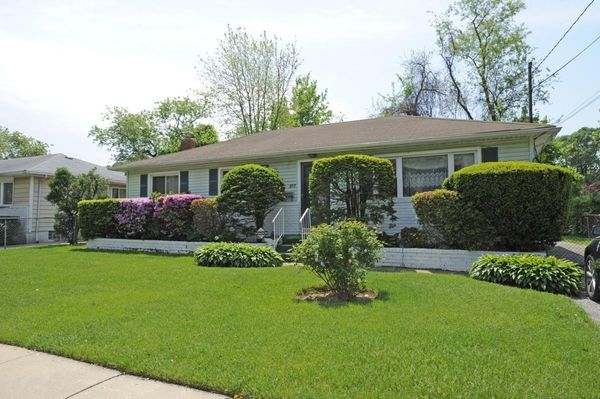
Tuesday, Corliss Gittens, who turned 48 Friday, received the award of her six-room ranch-style house at 517 Pinebrook Ct. from Justice John Galasso.

Gittens bought the house from her parents in late 2000. But when she mailed monthly checks to the mortgage company, Homeside Lending, the checks were never cashed, said Hempstead lawyer Fred Brewington, who represents Gittens. In 2001, Gittens was told by Homeside Lending officials that it could not locate evidence of the mortgage in its records.

“She had a mortgage and a deed. She went to a closing and purchased the house,” said Brewington. “She never stopped trying to find out to whom she should pay the mortgage because the uncertainty was making her distraught.”

Eventually, Gittens learned Homeside ceased to exist, and its parent company, SR Investments, was sold to Washington Mutual in 2002. Washington Mutual was in turn acquired by JPMorgan Chase in 2008. All of the companies, as well as the Federal Deposit Insurance Corporation, were named as respondents.

None opposed Gittens’ suit.

Brewington said he reached out to Chase on the issue, only to be told the bank knew nothing about it.

Michael Fusco, a spokesman for Chase in Manhattan, said the bank “has no comment at this time.”

Gittens did not want to be interviewed for the story, but Brewington quoted her as saying: “After so many years of existing in limbo, I am happy that I will have the resources of my property available to me.”

He said Gittens once sought a second mortgage, but failed to get it because no one could get any information on the existing one. He added that her case was filed to wipe out that mortgage.

County records show the 2009 property tax on the house as $7,667.44.

In his decision Galasso said: “The Court directs the Clerk of the County of Nassau in whose office the mortgage and note were presumably recorded on or about March 6, 2001, to mark the record of the debt secured by the mortgage canceled and discharged.”

County Clerk Maureen O’Connell said Thursday she got the order Thursday and will execute it immediately.

Wednesday, May 5, 2010

Is HAMP On Last Leg? Administration Pressures Loan Servicers for More

by Adam Quinones


Treasury Secretary Geithner today appeared before the Senate Financial Services and General Govt. Subcommittee.

On the agenda was....

Holding Banks Accountable: Are Treasury and Banks Doing Enough To Help Families Save Their Homes?

Below are a few comments from Geithner's prepared text that lead you into the story.


"The damage from housing crisis has affected millions of Americans. "

"It's affecting those who were taken advantage of by predatory lenders, seeing their interest rates suddenly and unexpectedly skyrocket. It's affecting those who took out traditional mortgages only to see their home's value plummet, leaving them owing more to the bank than their house is worth. And it's affecting those who, as a result of the broader crisis, have lost their jobs and are facing foreclosure."

"As you have recognized, Mr. Chairman, solving these problems is crucial to our economic recovery. For most Americans, their house is their most important financial asset, and as the financial crisis wreaked havoc on household wealth, the Administration moved to protect this critical component of stability."

"Together, Treasury and the Fed have purchased more than $1.4 trillion in agency mortgage backed securities. We also acted to stabilize the GSEs. These actions returned mortgage rates to historic lows."

"We recently made important enhancements to HAMP to help responsible borrowers, enhancements that will give us increased flexibility to reach our goal of reaching up to 3 to 4 million homeowners at risk of foreclosure over three years"

NOTHING NEW YET...BUT THIS IS WHERE THINGS GET TENSE:

"I want to be clear that we do not believe servicers are doing enough to help homeowners – not doing enough to help them navigate the difficult and often frightening process of avoiding foreclosure."

"We are concerned by the wide variation in performance we see across servicers and by the countless frustrated phone calls we receive from borrowers. We are troubled by reports that servicers have foreclosed on potentially eligible homeowners, or that they have steered these borrowers away from HAMP and into the bank's own modification program. That they have lost documentation, or claimed to. That they are not responding to the needs of responsible and increasingly desperate homeowners."

"None of this is acceptable. We are committed to making sure that servicers hold up their end of the bargain. We are conducting targeted, in-depth compliance reviews. We are compelling servicers to re-review groups of mortgages – or their entire book – for eligibility. And in circumstances where servicers are not compliant we will withhold incentives or demand their repayment"

"And we will soon publish much more detailed data on the performance of servicers to hold them accountable to the public – so that both members of Congress and the homeowners in your communities can assess for themselves the performance of these servicers."

Law Offices of Steven J. Baum loses another of JPMorgan Chase for lack of standing


By:  Nicholas M. Moccia
       Law Offices of Robert E. Brown, P.C.

It appears the attorneys at the Law Offices of Steven J. Baum have developed an exquisite expertise in commencing foreclosure actions for Plaintiffs who lack standing to foreclose.   It appears, moreover, that Baum's attorneys are developing a masochistic tendency to find themselves in front of Justice Arthur M. Schack whenever this is the case.

In JP Morgan Chase Bank, N.A. v George 2010 NY Slip Op 50786(U), Justice Schack once again vacated a judgment of foreclosure and sale and dismissed a foreclosure action for lack of standing.  Perhaps not surprisingly, Baum's attorneys did not even bother to oppose the Defendant’s order to show cause from which Justice Schack’s decision arose.

Justice Schack notes that in order to have standing to commence a foreclosure action, the Plaintiff must demonstrate (1) the existence of the mortgage and the mortgage note, (2) ownership of the mortgage, and (3) the defendant's default in payment.  Schack humorously observes that the Plaintiff's complaint reveals an utter lack of awareness as to where the mortgage and note were even recorded, let alone whether the Plaintiff was the holder of the note at the time the foreclosure action was commenced.  Justice Schack writes:


Then, plaintiff CHASE commenced the instant foreclosure action by filing the summons, complaint and notice of pendency with the Office of the Kings County Clerk on April 7, 2006. Plaintiff CHASE, in ¶ 1 of the instant complaint, alleges that it "is the holder of a mortgage bearing date the 17th day of September 2004 executed by GERTRUDE GEORGE to secure the sum of $381,500.00 and recorded at Instrument No. 2005000206826 in the Office of the Clerk of the County of KINGS, on the 11th day of April 2005; said mortgage is to be duly assigned by an Assignment to be recorded in the Office of the Clerk of KINGS County [sic] [Emphasis added]." Plaintiff's counsel, who has commenced thousands of foreclosures in Kings County, should be aware that mortgages in Kings County are recorded in the City Register of the City of New York, not the Office of the Kings County Clerk.

Worse still, Justice Schack points out that the foreclosure action was commenced before the note and mortgage were actually assigned to Chase—this means Chase did not in fact own the note and mortgagewhen they started the foreclosure.  As Justice Schack notes, "Standing to sue is critical to the proper functioning of the judicial system. It is a threshold issue. If standing is denied, the pathway to the courthouse is blocked. The plaintiff who has standing, however, may cross the threshold and seek judicial redress." (Saratoga County Chamber of Commerce, Inc. v Pataki, 100 NY2d 801 812 [2003], cert denied 540 US 1017 [2003]). Without standing, a case is dead on arrival.

Nevertheless, it seems Baum's attorneys have a mental block on the standing issue, and trip up with surprising regularity in this regard.   See Option One Mortg. Corp. v. Duke, 2009 WL 2505751 (Sup. Ct. Kings County 2009)(dismissed for lack of standing)(brought by Steven J. Baum, PC, Buffalo, NY, for Plaintiff); HSBC Bank USA, N.A. v. Vasquez,  2009 WL 2581672 (Sup. Ct.  Kings County 2009)(dismissed for lack of standing)(brought by Steven J. Baum, PC, Buffalo, for Plaintiff); Citigroup Global Markets Realty Corp. v. Randolph Bowling, 2009 WL 4893940 (Sup. Ct. 2009)(dismissed for lack of standing)(brought by Steven J. Baum, PC, Amherst, for Plaintiff); U.S. Bank Nat. Ass'n v. White, 2009 WL 159588, 1 (Sup. Ct. Kings County 2009)(dismissed for lack of standing)(brought by Steven J. Baum, PC, Amherst, for Plaintiff); U.S. Bank Nat. Ass'n v. Bernard, 2008 WL 383814 (Sup. Ct. Kings County 2008)(dismissed for lack of standing)(brought by Steven J. Baum, PC, Amherst, for Plaintiff); Wells Fargo Bank, N.A. v. Farmer, 2008 WL 2309006 (Sup. Ct. Kings County 2008)(dismissed for lack of standing)(brought by Steven J. Baum, PC, Buffalo, for Plaintiff); Ameriquest Mortg. Co. v. Basevich, 2007 WL 1815992, 1 (Sup. Ct. Kings County 2007)(dismissed for lack of standing)(brought by Steven J. Baum, PC, Amherst, NY, for Plaintiff).

Mr. Baum, you might consider making your team of attorneys take a field trip to the Brooklyn City Register—the address is 210 Joralemon Street, Brooklyn, New York.  Mapquest is a beautiful thing.


Monday, May 3, 2010

Justice Schack, After Being Denied a Pay Raise, Recuses Himself from Foreclosure Matter

Justice Schack published a volumnious decision explaining his rationale for recusing himself from a foreclosure matter.  See U.S. Bank Natl. Assn. v 1163 Prospect Realty Corp., 2010 NY Slip Op 50765(U) (Sup. Ct. Kings County May 3, 2010).  Justice Schack explains: 

To avoid any potential appearance of impropriety in the instant case, since both Senator Craig M. Johnson and Assembly Member Marc S. Alessi are both of counsel to Jaspan Schelsinger LLP, plaintiff's counsel, I must recuse myself from this matter. If I were to deny the instant motion for an order of reference it could be construed as retaliation against the Legislature by an aggrieved judge. Conversely, if I were to grant the instant application for an order of reference, it could be perceived as an attempt to curry favor with Mr. Johnson, Mr. Alessi, and their 210 colleagues in the New York State Assembly and Senate. I know I can be fair and impartial in deciding the instant motion for an order of reference. However, in the exercise of discretion and good conscience, and to avoid any speculation as to the rationale for my ruling, I must recuse myself from this case.

I hope that Mr. Johnson and Mr. Alessi would allow the judges of this state to receive their first pay raise in the twenty-first century. Thanks to our legislators, including both Senator Johnson and Assemblyman Alessi, our New York State judges are the "Rodney Dangerfields" of government. A pay raise would help to give us a little respect, instead of, as said by former Chief Judge Kaye in January 2008, "the disdain with which we are treated."

Tuesday, April 27, 2010

JUDGE MCMAHON TROUNCES HIGH VOLUME DEBT COLLECTOR, FOSTER & GARBUS, IN RICHMOND COUNTY SUIT

In Citibank, N.A., v. HS Index No. 101954/2009, Supreme Court Justice Judith McMahon dismissed a suit which purportedly sought to enforce a note against Defendant in the amount of $495,000.00 Dollars. But there’s a little problem—no such note exists. In his motion to dismiss Robert Brown, Esq., the attorney for the Defendant pointed out that the Citibank, N.A., was attempting to enforce an instrument that the Defendant never actually executed. In this case, the Defendant executed a home-equity line of credit which is not memorialized by a note, as for instance in a traditional home mortgage, since the principal loan amount of a line of credit fluctuates in a manner similar to a credit card.

Even more disturbing is the apparently false affidavit of service submitted by Citibank’s counsel, Foster & Garbus, Esqs., of Farmingdale, New York. An affidavit of service is evidence that defendants received sufficient notice for a law suit to proceed. Without proper service, defendants, more often than not, find out that a lawsuit had been commenced only after a judgment is entered against them.

Foster & Garbus is one of the largest debt collecting law firms in New York State and is alleged to have abused serving process in a lawsuit instituted by Attorney General Andrew Cuomo for “Sewer Service.” The affidavit of service proffered by Foster & Garbus is this case is yet another example of such abuse.

Attorney General Cuomo has made an example of Forster & Garbus in order to put all law firms engaged in high-volume debt collections (also know as “foreclosure mills”) on notice that they are responsible for the conduct of the companies they use to serve complaints and other legal documents. Law firms cannot turn a blind-eye to the abuses perpetrated on their behalf. The Attorney General’s Office has made two press releases on this matter, dated April 14, 2009 and July 22, 2009 where Cuomo notes that Forster & Garbus LLP “relied on legal papers… that it knew or should have known were false.”

“Sewer service” is the term used when the process server states in an affidavit that he served the defendant when he did not. When a defendant fails to respond to a law suit, as is so often the case in collection matters, the plaintiff wins by default. Armed with a default judgment, a creditor can garnish the defendant’s wages or bank account.

Sewer service is worse today than ever before. In 1986, 48,000 default judgments due to sewer service were entered annually in New York City. Today, 300,000 debt collection suits are filed annually in New York City of which more than 80% result in default. The majority involve debt collectors who pay process servers as little as $5 per service which leads to sewer service.

Because sewer service undermines the legitimacy of the judicial system while preventing defendants from raising legitimate defenses, it is of great concern to judges, the Department of Consumer Affairs (DCA), public interest lawyers and the media. Indeed, Administrative Judge Fern A. Fisher of the Civil Court of the City of New York laments that “many defendants” are not receiving notice from process servers.

When a process server actually attempts service in accordance with the law, he is able to personally serve the defendant about 40% of the time. This finding was made by the undercover detective who worked as a process server in 1986. When one examines affidavits of service involving debt collectors, personal service is rarely made. Indeed, South Brooklyn Legal Services examined 324 affidavits of service related to eight process serving agencies and found a highly suspect personal service rate of 2.73%.

Acknowledging these defects among others, Justice McMahon dismissed the lawsuit brought by Foster & Garbus against the Defendant herein. This is the second time Justice McMahon has thrown out such a case by Foster & Garbus—see Citimortgage, Inc., v. Maria Gil, Index No. 100830/2009. Maria Gil was also represented by foreclosure defense attorney, Robert E. Brown, Esq.

Justice Judith McMahon is an Acting Supreme Court Justice presiding in Richmond County Supreme Court since January 2006. Justice McMahon has a predominately civil caseload but also sits in Criminal Court on weekends in the arraignment part. Previously, she had been elected in November 2002 to New York City Civil Court and was also a court attorney to Justice John Leone and Justice Eric Vitaliano. Prior to working in the court system, she was a trial lawyer involved in complex tort litigation for the law firm of Julian and Schlesinger. She had attended Rutgers College of Pharmacy and practiced pharmacy for five years before attending New York Law School.

Thursday, April 22, 2010

Justice Schack threatens to sanction Flushing Savings Bank and its counsel

In  Flushing Savings Bank v. Chancay, Justice Schack threatens to sanction Flushing Savings Bank and its counsel for seeking an order of reference during a foreclosure action on a mortgage that had already been paid in full and satisfied.

See similar case by Justice Schack, Wells Fargo Bank, N.A. v Hunte.

Justice Jeffrey Arlen Spinner sanctions Emigrant Mtge. Co. Inc. with $100K in exemplary damages for acting in bad faith during a foreclosure settlement conference


In Emigrant Mtge. Co. Inc. v Corcione,  Justice Spinner slams Emigrant Mtge. Co. and its counsel for "unconscionable, shocking or egregious" behavior with an extraordinary array of exemplary damages. These damages included the following:

(1) that Emigrant be forever barred and prohibited from collecting any of the claimed interest accrued on the loan between the date of default and March 1, 2010; 
(2) that Emigrant be barred and prohibited from recovering any claimed legal fees and expenses as well as any and all claimed advances to date;
(3) that Emigrant 's debt be determined at this time to be no more than the principal balance of $ 301,721.58; and
(4) exemplary damages in the sum of $ 100,000.00, recoverable by Defendants from Emigrant .

In particular, Justice Skinner justifies his imposition of exemplary damages by citing, inter alia, the bad faith with which Plaintiff's counsel conducted itself during a foreclosure settlement conference.  Justice Skinner in his decision cites a decidedly one-sided "Loan Modification Agreement" proffered by Emigrant's counsel which contained such provisions as follows:

(1) that Defendants would waive their right to reorganize under the US Bankruptcy Code and that the Defendants waive their right to the protection of the Bankruptcy stay as against Emigrant;
(2)  waive of any claim, counterclaim, right of recoupment, affirmative defenses or set-off of any kind;
(3) waive of an jurisdictional defenses or any defenses based on Emigrant's failure to satisfy any conditions precedent;
(4) that any payments made pursuant to the agreement are made without prejudice to the loan acceleration or pending foreclosure and that payment shall not constitute a waiver of Emigrant's right to foreclose; and
(5)  all payments are due on the first of the month without any grace period, and failure to pay would entitle Emigrant to immediately resume its foreclosure action.

Justice Spinner was particularly perturbed by the waiver of the right to seek relief under the Bankruptcy Code, and posited that such a waiver would be unenforceable and void as against public policy.

Justice Spinner has a track record of punishing banks for overreaching in the foreclosure context.  In an extreme case, Spinner has been known to void mortgages altogether.  See article in NY Post:   Judge blasts bad bank, erases 525G debt

Friday, April 16, 2010

Justice Schack threatens to sanction attorney for a frivolous motion for a judgment of foreclosure

In Wells Fargo Bank v. Hunte, 2010 NY Slip Op 50637(U)(Sup. Ct. Kings County 2010), plaintiff's counsel never notified the Court that the mortgage had been satisfied and failed to discontinue the instant action with prejudice. Justice Schack discovered that the mortgage had been satisfied by personally searching the Automated City Register Information System (ACRIS) website of the Office of the City Register, New York City Department of Finance. Plaintiff's counsel, Peter G. Zavatsky, Esq., and his firm, Zavatsky, Mendelsohn & Levy, LLP, are being given an opportunity to be heard as to why the Court should not sanction them for making a "frivolous motion," pursuant to 22 NYCRR §130-1.1.

Thursday, April 15, 2010

Et Tu, WaMu? Seattle Bank Was Subprime 'Polluter'

Et Tu, WaMu? Seattle Bank Was Subprime 'Polluter'

Fannie Mae regulates foreclosure actions brought by MERS

On March 30, 2010, Fannie Mae issued an announcement (SVC-2010-05) which provided updates and clarifications to several loan servicing policies, including:

  • Document custodian requirements for government loan modifications
  • Foreclosure attorney fees for New Mexico and Vermont
  • Mortgage insurance cancellations on loan modifications
  • Foreclosure actions in the name of MERS
  • Flat File layout for Payment Reduction Plan loans
  • Balloon mortgage loans with conditional modification option
Of particular interest to practitioners in the area of foreclosure defense are the provisions pertaining to MERS. Fannie Mae has mandated that MERS must not be named as a plaintiff in any foreclosure action on a mortgage loan owned or securitized by Fannie Mae.  This is significant because it appears that Fannie Mae is acknowledging that MERS does not have the capacity or standing to bring foreclosure actions.  This also tends to support the inference that MERS may not have the capacity to assign loans as is so often the case.

Why does Fannie Mae takes this stance?  The answer to the question lies in the origin and function of MERS

MERS (short for Mortgage Electronic Recording System) was conceived and created by a tight-knit group of powerful mortgage industry insiders for the purpose of avoiding the fees local government require for the recording of mortgage assignments.  The details of how MERs would work were not ironed out until mid-1996, and two years later MERS, Inc., incorporated in Delaware as a non-stock corporation owned by mortgage banking companies that made initial capital contributions ranging from $10,000 to $1,000,000.  The primary goal of MERS was to lower costs for servicers, and among the first entities to utilize MERS extensively were none other than Fannie Mae and Freddie Mac.

Mortgage finance companies currently use the MERS' name to interact with the land title recording system (i.e. the county clerk) in one of two ways:  either by recording MERS' name as an assignee, or by recording MERS' name as the original mortgagee.  For instance, under the former recording strategy, the originating lender makes a traditional mortgage loan by lisiting itself as payee on the promissory note and as the mortgagee on the security instrument.  The loan is the assigned to a seller for repackaging through securitization for investors.  However, instead of recording the assignment to the seller or the trust that will ultimately own the loan, the originator pays MERS a fee to record an assignment to MERS in the county records.  MERS' counsel maintains that MERS becomes a "mortgagee of record" even though its ownership of the mortgage is fictional.

Although MERS records an assignment in the real property records, the promissory note which creates the legal obligation to repay the debt is not negotiated to MERS--MERS is never the holder of the note.  Everyone agrees that MERS is never entitled to receive a borrower's monthly payments, nor is MERs ever entitled to receive the proceeds of a foreclosure or deed of trust sale.   MERS has no actual financial interest in any mortgage loan.  MERS does not even provide lien releases of the mortgages it purports to own, instead referring title attorneys, refinancing lenders, and consumers to the loan's servicer.  MERS' revenue comes, not from the repayment of the loan or the disposition of collateral, but from the fees that the originator and other mortgage finance companies pay to MERS.  Once a loan is assigned to MERS, the public land title records no longer reveal who (or what) actually owns a lien on the property in question.

In addition to record keeping and recording system liaison roles, MERS has also become directly involved in consumer finance litigation.  Historically, the owner of the mortgage loan, or a servicer hired to collect borrower payments, sues the homeowner in a forelcosure action.  But, when MERS is listed in county records as the owner of a mortgage, courts have initially made the natural assumption that the appropriate plaintiff to bringing a foreclosure action is MERS.  In order to move foreclosures along as quickly as possible, MERS has allowed actual mortgagees and loan assignees or their servicers to bring forelcosure actions in MERS' name, rather than in their own name.  Thus, not only does the use of MERS' services allow financiers to avoid county recording taxes, it also allows them to list an obscure, apparently official institution as the instigator of a foreclosure.

By May of 2007, approximately 60 million loans had been recorded under MERS' name and more than half of the nation's existing residential loans are recorded under MERS' name.  Not satisfied, MERS' CEO insisted that "[o]ur mission is to capture every mortgage loan in the country."

The collapse of the nation's subprime mortgage lending industry has prompted courts to take a fresh look at the legal foundations of MERS' role in the land title recording and home foreclosure system--particularly, whether MERS owns title to mortgages either as a mortgagee or as assignee; and whether MERS has standing to bring foreclosure actions.  There appears to be a growing consensus among courts, and Fannie Mae in light of its recent announcement, that the answer to both of these questions is a resounding "no".

While the language in MERS boilerplate contracts is not particularly enlightening in answering these questions, basic economic principles of the law provide a simple answer to this puzzle.  The American legal tradition looks to the economic realities of a transaction in determining whether a business is a secured creditor or  mortgagee.  The most familiar application of this principal is found in Article 9 of the UCC which construes transactions that pose as "leases" as disguised purchase money loans based on the economic realities underlying these so-called "lease."  The UCC insists that the words used by the parties to a contract are not controlling when the words mischaracterize the underlying transaction.  Mortgages are no different, and courts will not blindly enforce its boilerplate provisions when they have no basis in reality.  MERS is not a mortgagee (or an assignee) simply because ink on paper makes this assertion--rather the law compels courts to look to the economic nature of the transaction to identify MERS' role.

The fundamental reality is that MERS is not a mortgagee with respect to any loan registered on its database MERS does not fund any loans.  No homeowner promises to pay MERS any money.  MERS is never the holder of the note or mortgage.  MERS is never entitled to receive the proceeds of a foreclosure sale--even when it commences foreclosure actions in its own name.

Therefore, it should be no surprise that Fannie Mae has mandated that MERS must not be named as a plaintiff in any foreclosure action on a mortgage loan which Fannie Mae owns or has securitized.

Foreclosure rates surge, biggest jump in 5 years


LOS ANGELES – A record number of U.S. homes were lost to foreclosure in the first three months of this year, a sign banks are starting to wade through the backlog of troubled home loans at a faster pace, according to a new report.

[continue reading]